
The weather, the surroundings and the occasion were conspiring to dampen the soul.
It was September and the rain was unrelenting. The steam rose off us as we filed into St Giles Cripplegate, a church dating from the 14th century stranded in the midst of the Brutalism of the Barbican Centre and the high rises of the financial district.
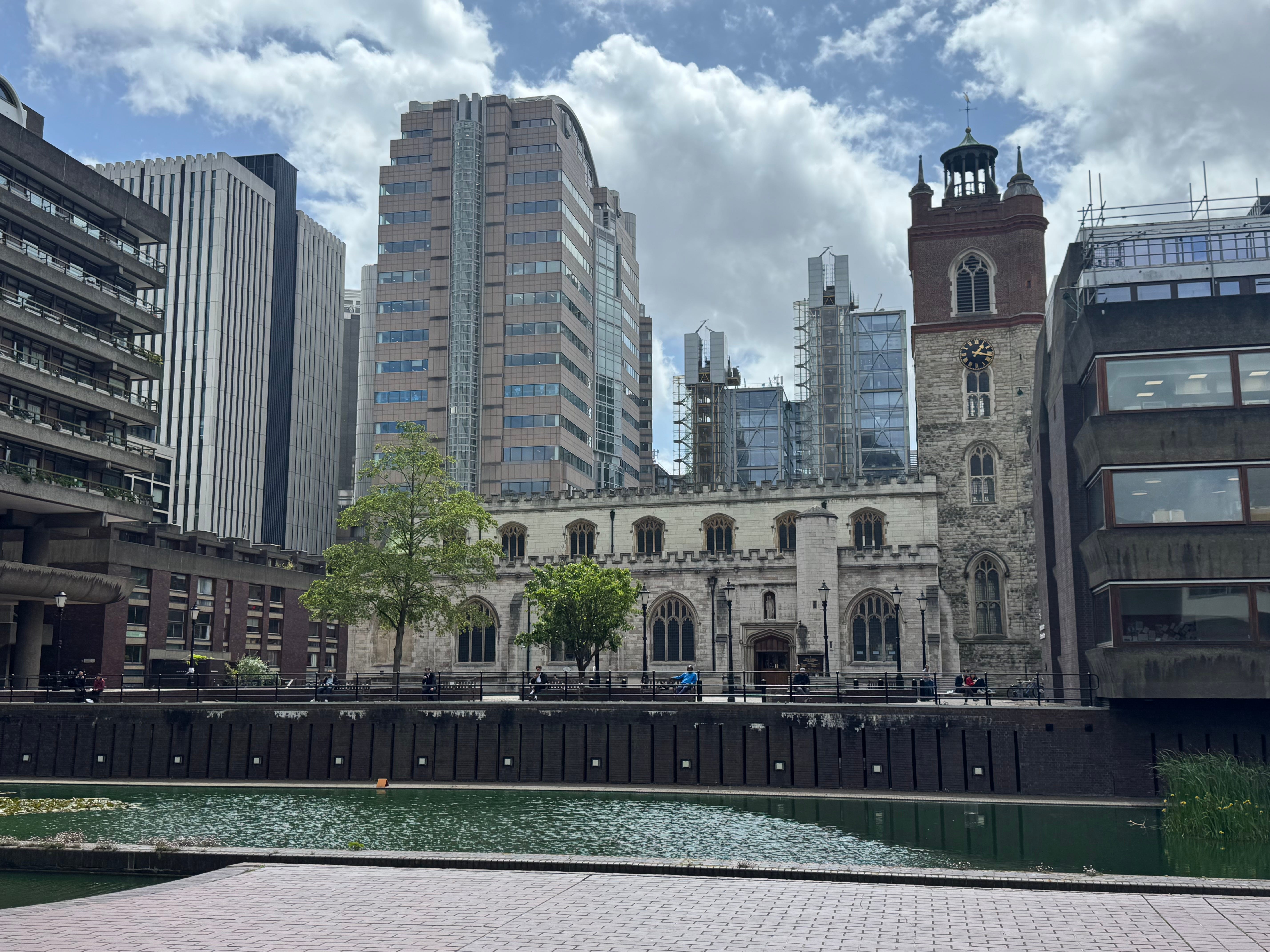
We were there to remember the life of Dai Powell, one of Britain’s foremost social entrepreneurs and a trustee of the Lottery spin-off I had been a founder director of ten years earlier.
He was one of the fittest 60 somethings I knew. However that hadn’t stopped him dropping dead just weeks after picking up the keys of the hill farm he had always dreamed of retiring to. A Welshman, as you may have worked out from the name, his peregrinations across the globe had finally brought him home. As we left the church we were handed a daffodil bulb to plant out to remember Dai by.
As chance would have it, I was setting out on my own Welsh odyssey the very next day. I had been so inspired and emboldened by my first visit to Cwm Doethïe, Tir Natur’s rewilding site back in the spring1 now that autumn was upon us I was determined to do it again. The difference this time would be that I would arrive on foot rather than get chauffeur driven there.
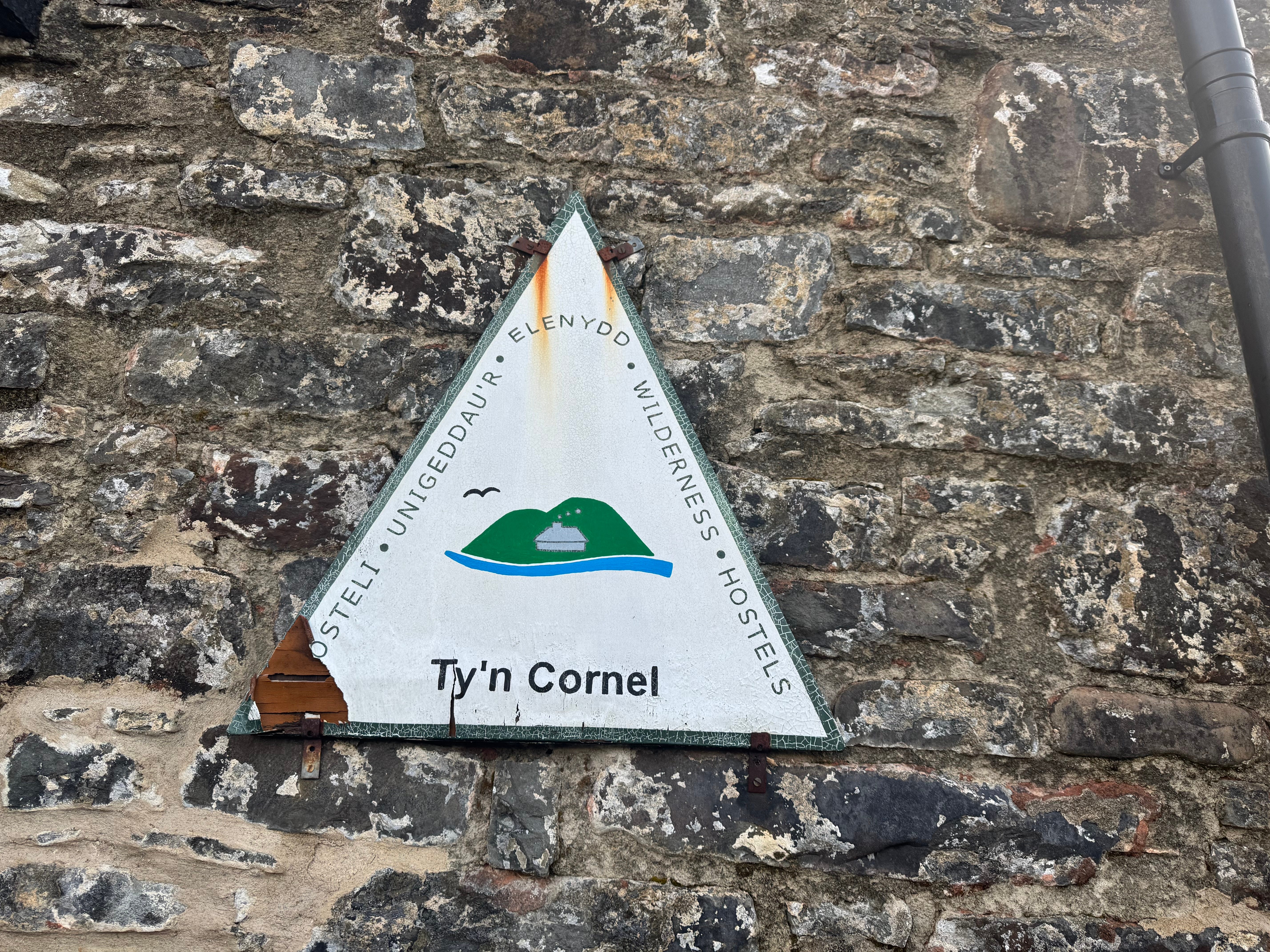
Swopping my dark suit for a rucksack and walking boots, 24 hours later I had reached my ‘base camp’ in Llandovery thanks to the Great Western Railway. More than 20 miles lay between me and my final destination for that night, Ty’n Cornel, the most remote hostel in Wales and the nearest human habitation to Cwm Doethïe.
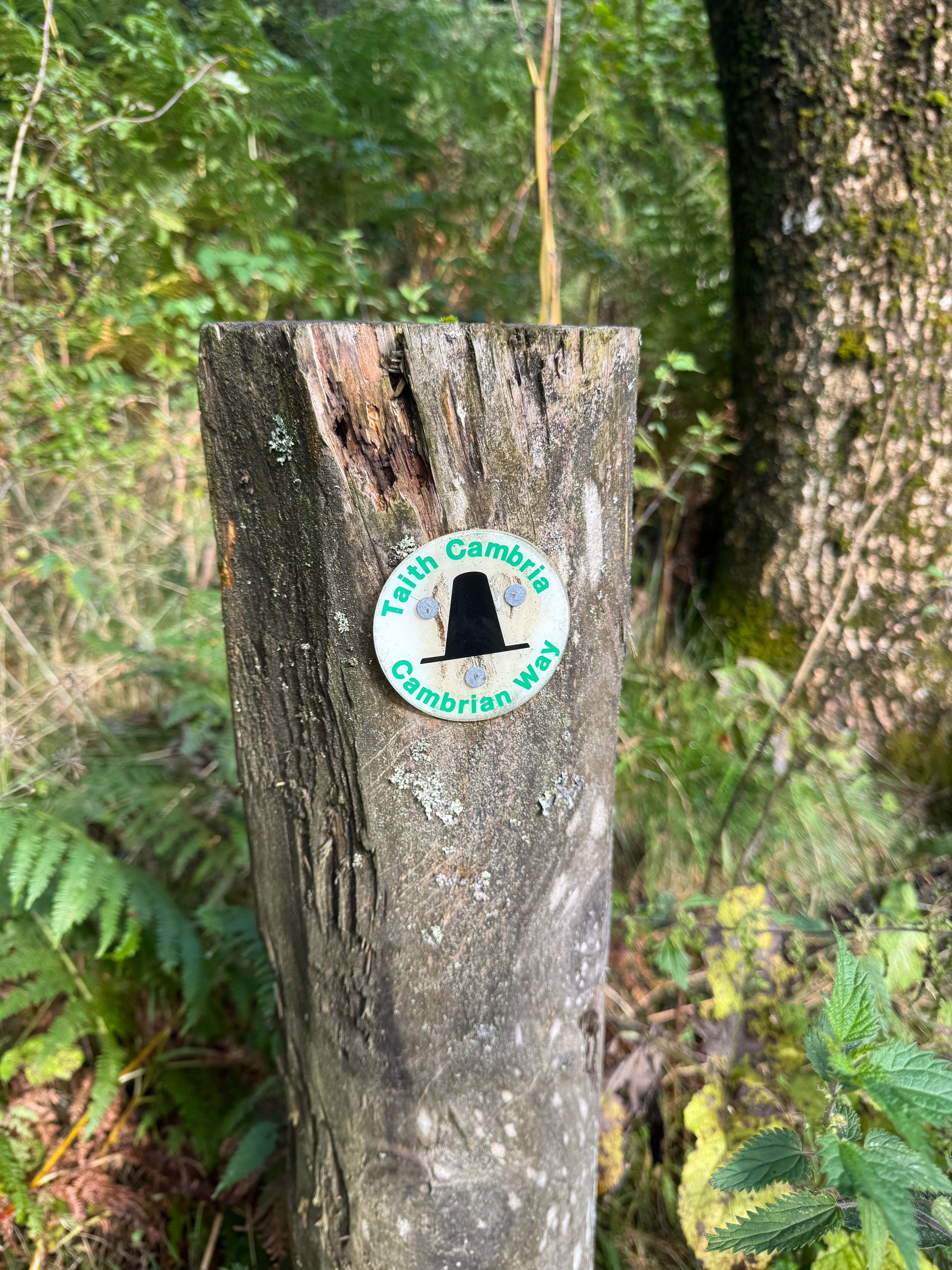
I strode out of Llandovery on the main road heading north. 15 minutes later I branched off onto the Cambrian Way, a 291 mile long distance trail that starts in Cardiff and ends in Conwy Castle on the north coast. I was biting off just a 20 mile chunk of it.
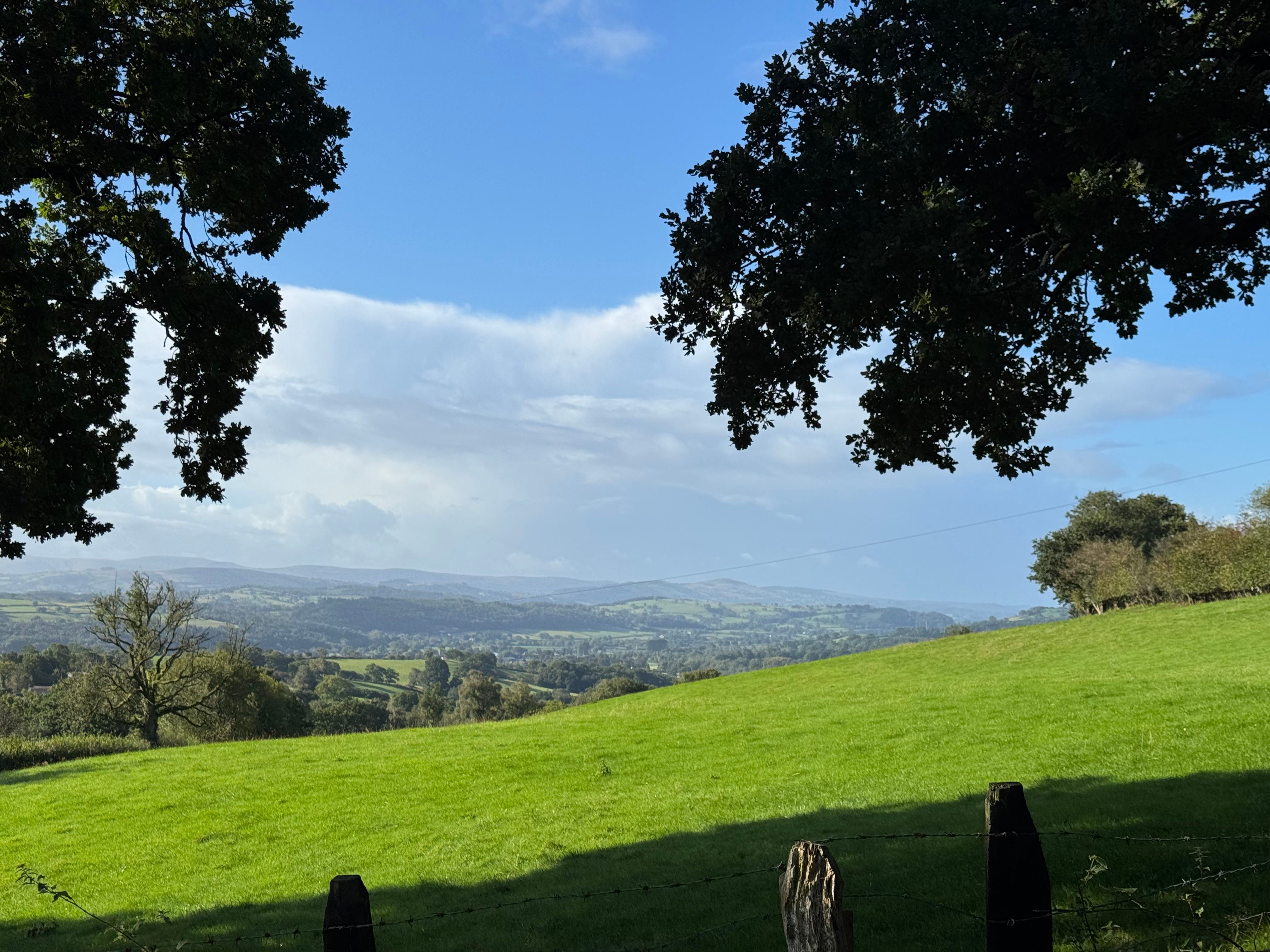
The first few miles looked and felt as familiar as any of my jaunts into the countryside around London. Rolling hills and neat fields, filled with preternaturally green grass for livestock grazing.
Half an hour in and there was an abrupt change in landscape. A scrubby knoll of land rose out of a conifer plantation, bursting with life.
Swallows careened overhead, tacking into the south westerlies that had built up in strength the last hour. A red kite was executing aerial three point turns with its distinctive forked tail. These hills of mid Wales were the bird’s last hold-out in the British Isles and extinction beckoned. Their turnaround came with the bird’s reintroduction in the early 90s, 200 miles to the east in the Chilterns. As the red kites gradually spread out west down the M4, the new kids on the block must have joined up with the Welsh remnants just a couple of decades ago. I am not one to anthropomorphise but I wonder what the reaction was when the English red kites appeared over the Brecon Beacons. Were they welcomed with open wings? Or with greetings of ‘get orf my land’?
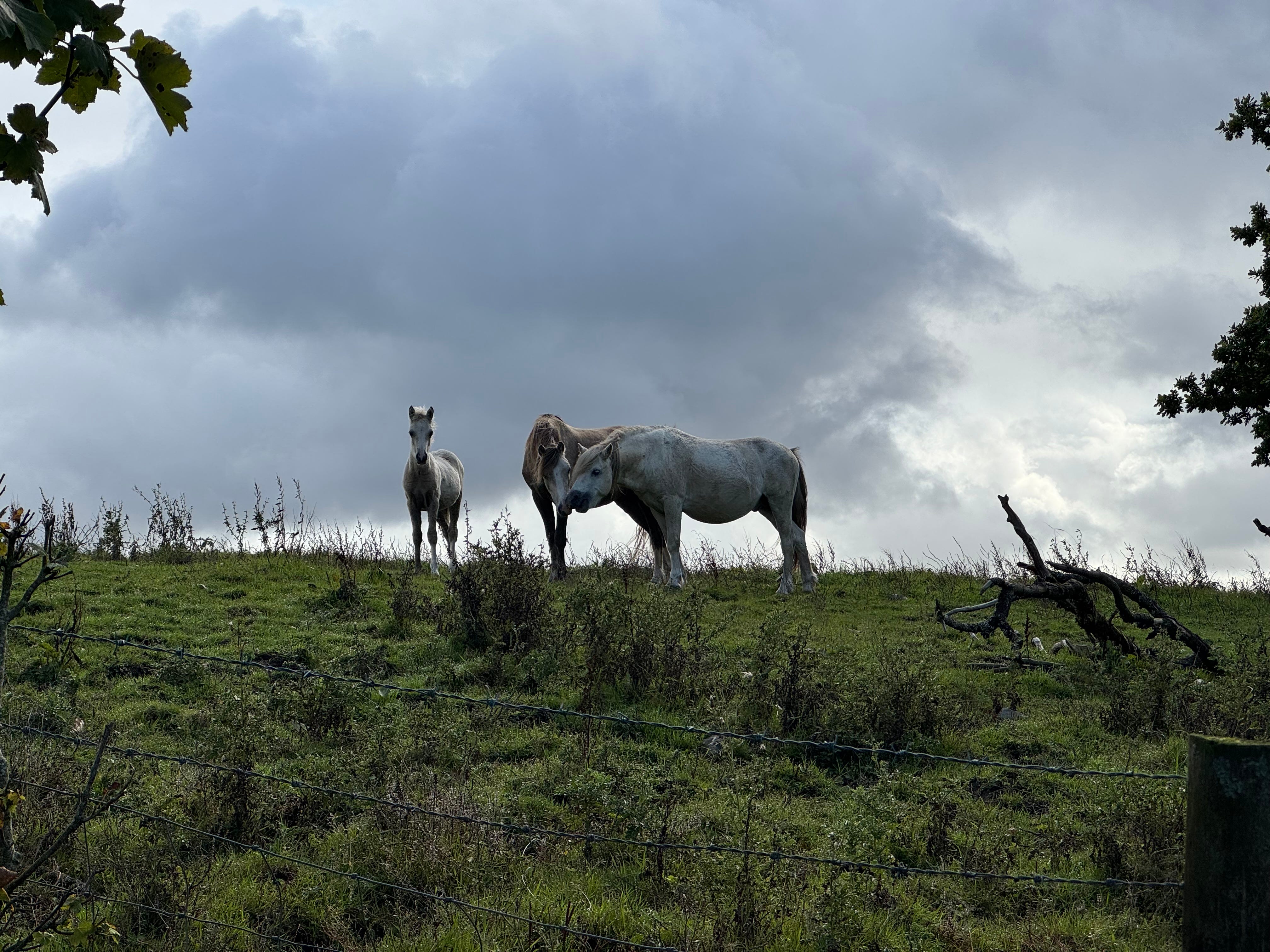
A trio of horses gave me the hard stare as the rain clouds built up whilst a pair of ravens cawed at me as if to say, we’ll take it from here. I could have sworn it was the same ravens that accompanied me right to gates of my destination.
I was now in countryside that was remote as I had ever known. And I had trekked to a few on two wheels and two legs in my time.
I felt further from human habitation than when I had cycled into the high mountains of the Pyrenees or the bandit country of Corsica’s interior in my middle years. The only thing like it were the Cullins that I had walked on the Skye Trail half a dozen years back. There I could see that I was the only human in its bleak landscape for miles around like I did now.
I felt as exhilarated as I did back then. But now I was in my 60s I had to gulp back a moment of anxiety. No mobile signal and more miles than I had walked in a few years. What if I stumbled and broke something? Worse than that, what if I dropped dead like Dai did, for all I knew not far from where I was now? How long would it take for my body to be found?
The going was getting tough now. It wasn’t like the path was climbing. The Cambrian Way was still running close to the river. It wasn’t fatigue from the distance either. I had covered not far off 20 miles and the hostel was in sight. What was weighing me down was the water flowing off the hillside directly into my boots. The rain that had drenched me yesterday in London must have been an order of magnitude greater here in Wales. In years gone by much of it would have been held on the hill-tops, in the peat bogs that blanketed the land in times past. But decades of over-grazing and industrial forestry had eroded the soil away. The Cambrian Way was itself a flowing river now and I was getting slower and slower as I was reduced to hopping from one stepping stone to another. The next day I would learn from the guys at Tir Natur of the plans to restore that peat but in the meantime I was having to literally wade through the consequences of its degradation.
Just at the moment that I felt that my boots had reached maximum soddenness, the clouds lifted before me and ‘Nature’s Land’, in Welsh Tir Natur rose up before me.
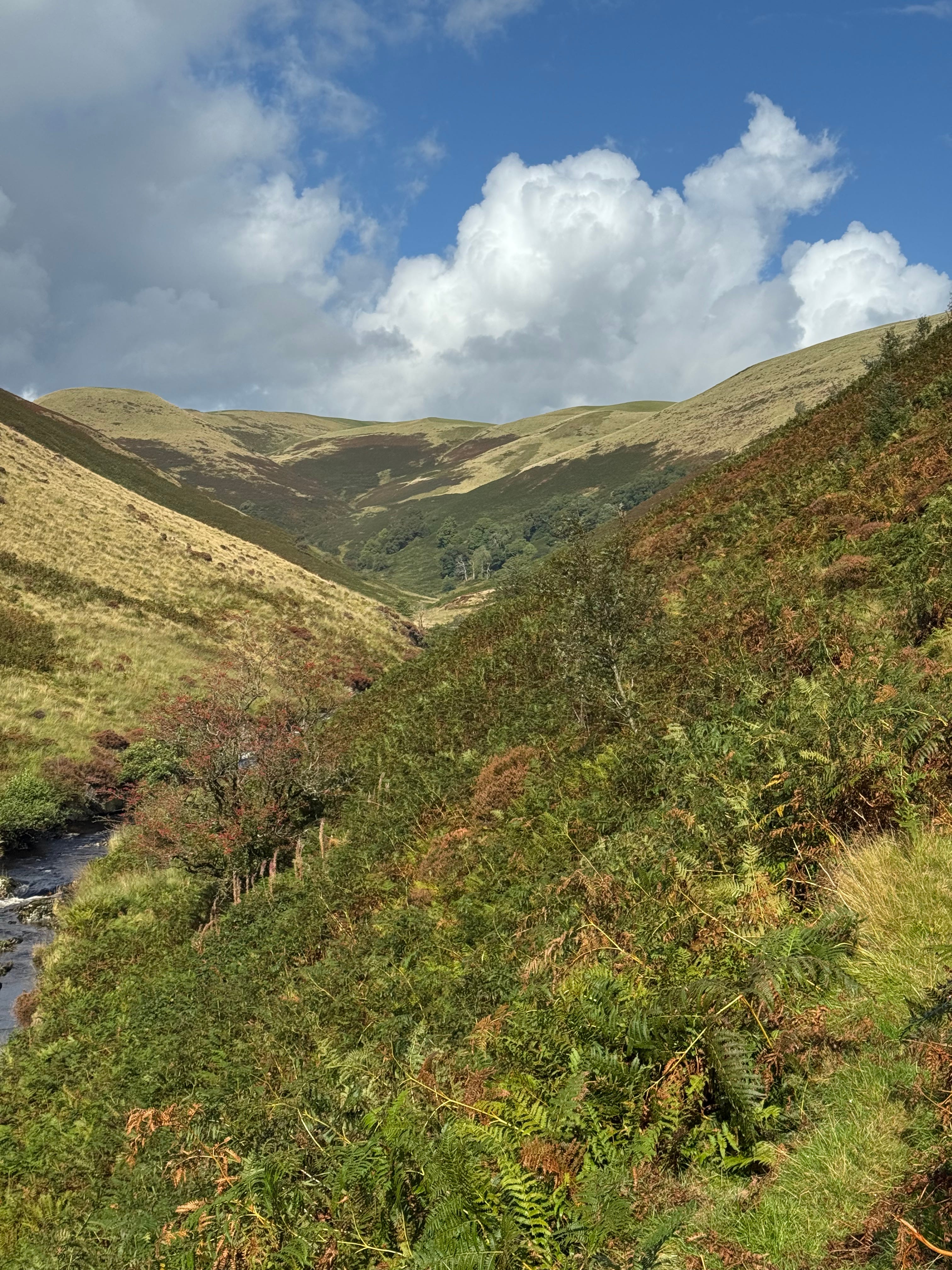
‘Awesome’ was the word. I was awed by the sight of the stark beauty of the ‘rhos’, the rough grazing land that had once covered 40% of Wales’s land mass.
There was another sense of the word ‘awe’ that I found almost overwhelming at that moment. Even though I was a couple of miles away, I could see how knackered the land was, even to my untrained eye. Choked in bracken and molinia grass, I was struck by how bare it looked, like a lunar landscape. There was much work to be done to give nature the space to return.
The lasting sense of awe I felt though was that I personally had a stake in these 1,195 acres. Not in a legal sense. Strictly speaking I had made a donation to a charity that were in the process of purchasing the land outright. It’s not like I had a share in a community land trust. I could not point to a specific parcel of land and say “my money bought these acres”. I have never owned any land unless you count the suburban garden that came with the house I brought my family up in. And I have nothing in my genes or my history that attaches me to mid Wales2.
But the next morning, as I climbed out of my bunk at the hostel, stretched my weary body and looked out of the window, I experienced a sense of belonging to a place in a way I had never felt before.
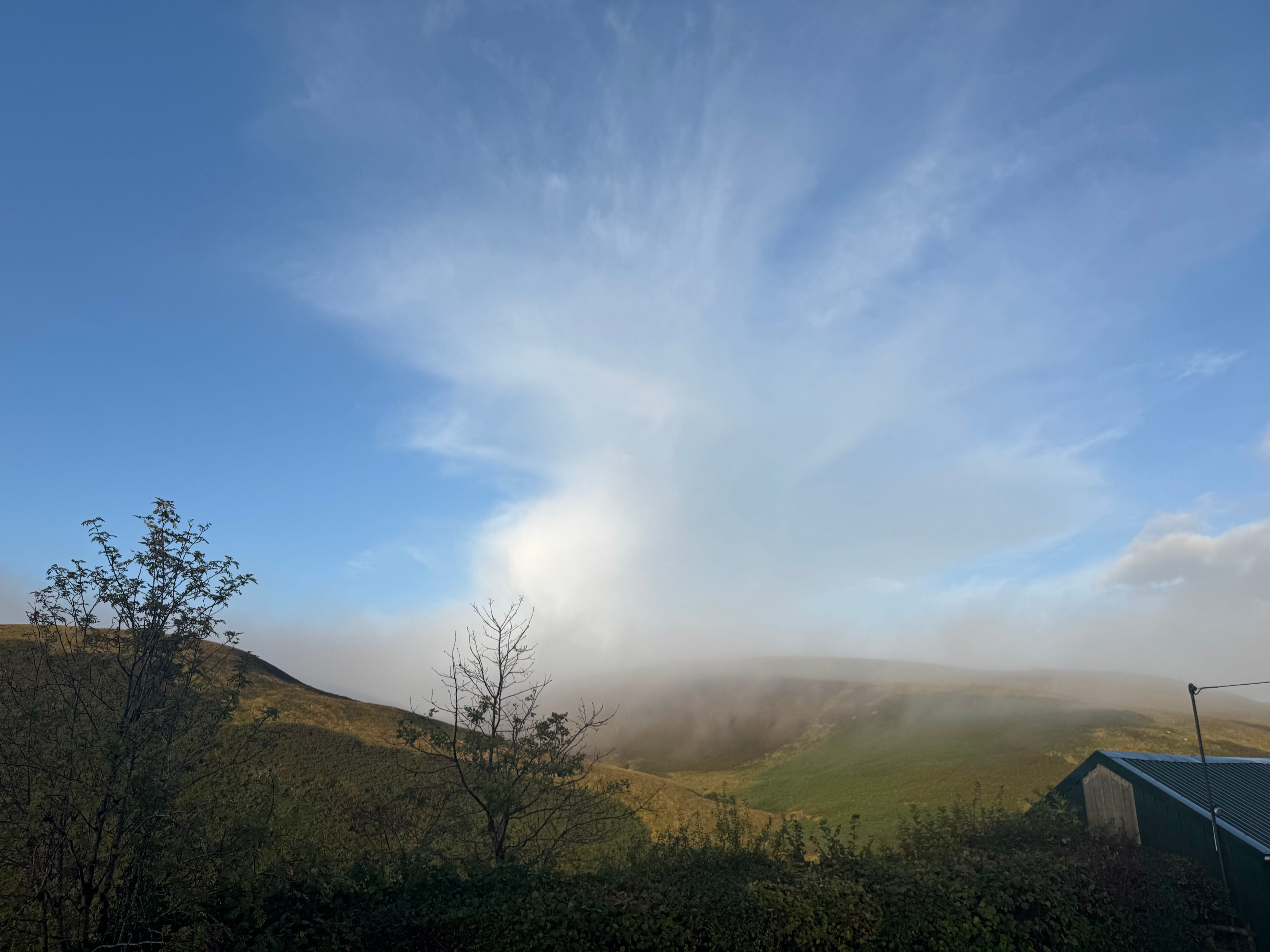
Less than 48 hours earlier the rain-drenched concrete of London, the meditations on mortality and mourning had weighed heavy. But now I felt only lightness.
In the words of the Welsh poet Vernon Watkins, friend and contemporary of Dylan Thomas: “…in these Welsh hills, I marvel, waking from a dream of stone, that such a peace surrounds me…”3
Dropping dead in one's prime is probably the best death we can hope. A Friend recently had a stroke, and lingered for six weeks in hospital in a state of tube fed limbo before slipping away. I'm hoping for a quick exit, although not quite yet!
As a Welsh woman, living in Australia, I long for that experience. Except for sodden boots! Well done.