
Once we had settled into Wiltshire life, I worked on optimising my 30 minute drive into work.
I would turn left from our cottage in the village Pewsey in the direction of Devizes. After four miles I would hang a hard right at Alton Barnes. The road rose up steeply to the long barrow at Adams Grave that we’ve encountered already1.
On reaching the summit in the summer months of those early years of the 1990s, there was often as not a film crew stationed there. They were camped out to catch sight of whoever or what ever it was that was carving the crop circles in the farmer’s field below.
The fame of those Alton Barnes crop circles spread far and wide. They even ended up gracing the album cover of my most cherished Led Zeppelin compilation.
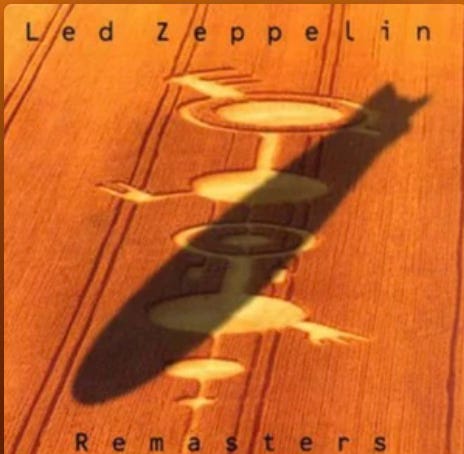
I used to play squash with Tim, the Alton Barnes farmer whose wheat fields were being visited by these ‘aliens’. He had no clue what was going on. It wasn’t like he was benefitting from them financially. The most commercial step he took was to plant an honesty box by the road. And that got vandalised.
From there my car would crest the Wansdyke, a defensive ditch dating back to the 5th century. The ancient Britons had thrown it up in a hurry once they realised that the Roman army had abandoned them and they were defenceless against marauding Saxons streaming over from the North Sea.
The road then made a swooping descent past the long barrows at East Kennett and West Kennett. The latter was constructed in the 4th millennium BC. At over 100 metres it is one of the longest in Britain.
I once witnessed a summer solstice there. Most uncharacteristically ‘new-age’ of me at that time. Mine was the only company car parked up in the lay-by on the A40 I think. I was definitely the only one there without finger cymbals.
Back on my drive to work, a glance to my left would reveal the top of Silbury Hill.
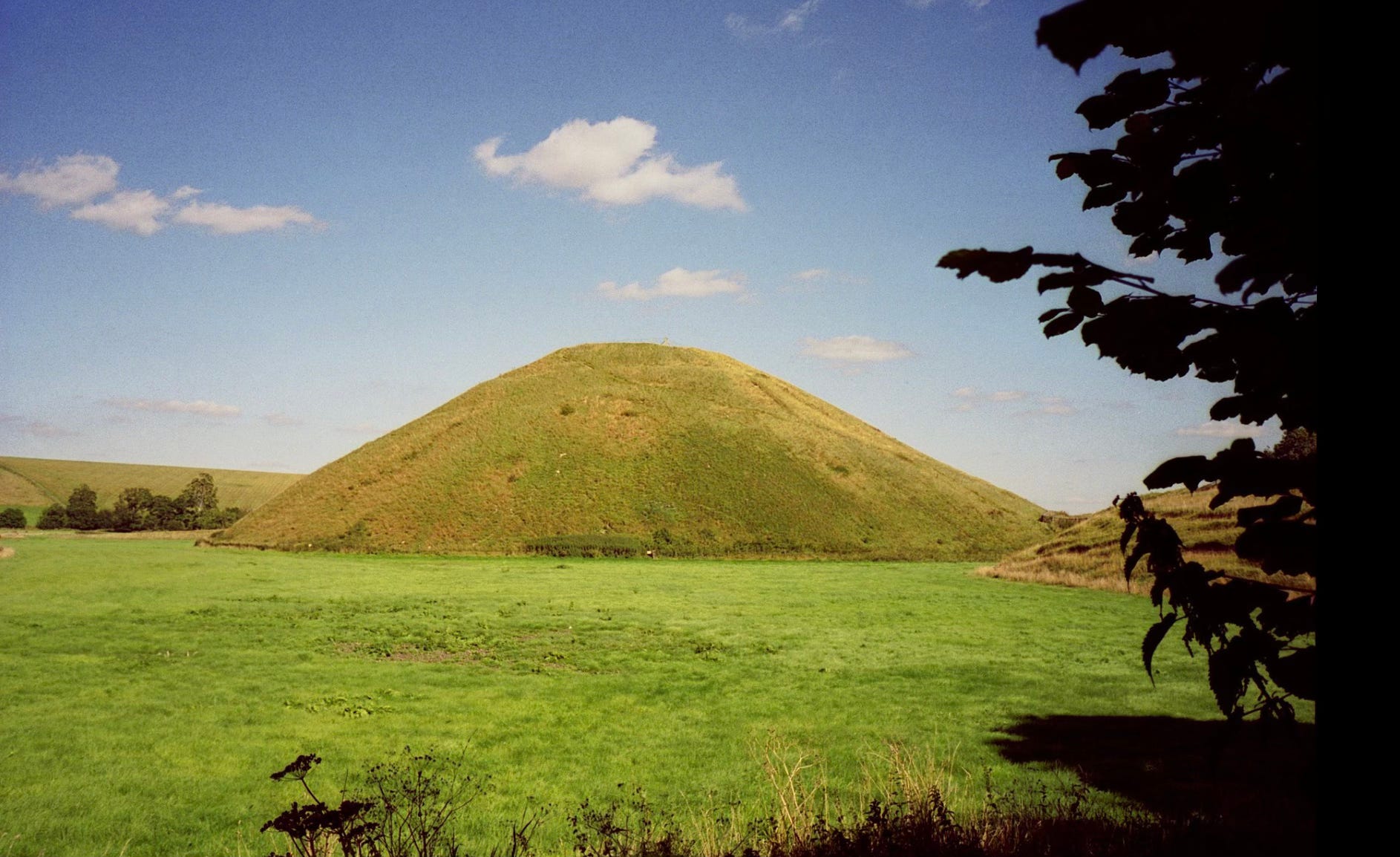
An artificial chalk mound constructed a thousand years after the nearby long barrow, Silbury Hill is one of the tallest prehistoric man-made mounds in Europe, similar in volume to contemporary Egyptian pyramids. And it is still a complete mystery what it is doing there.
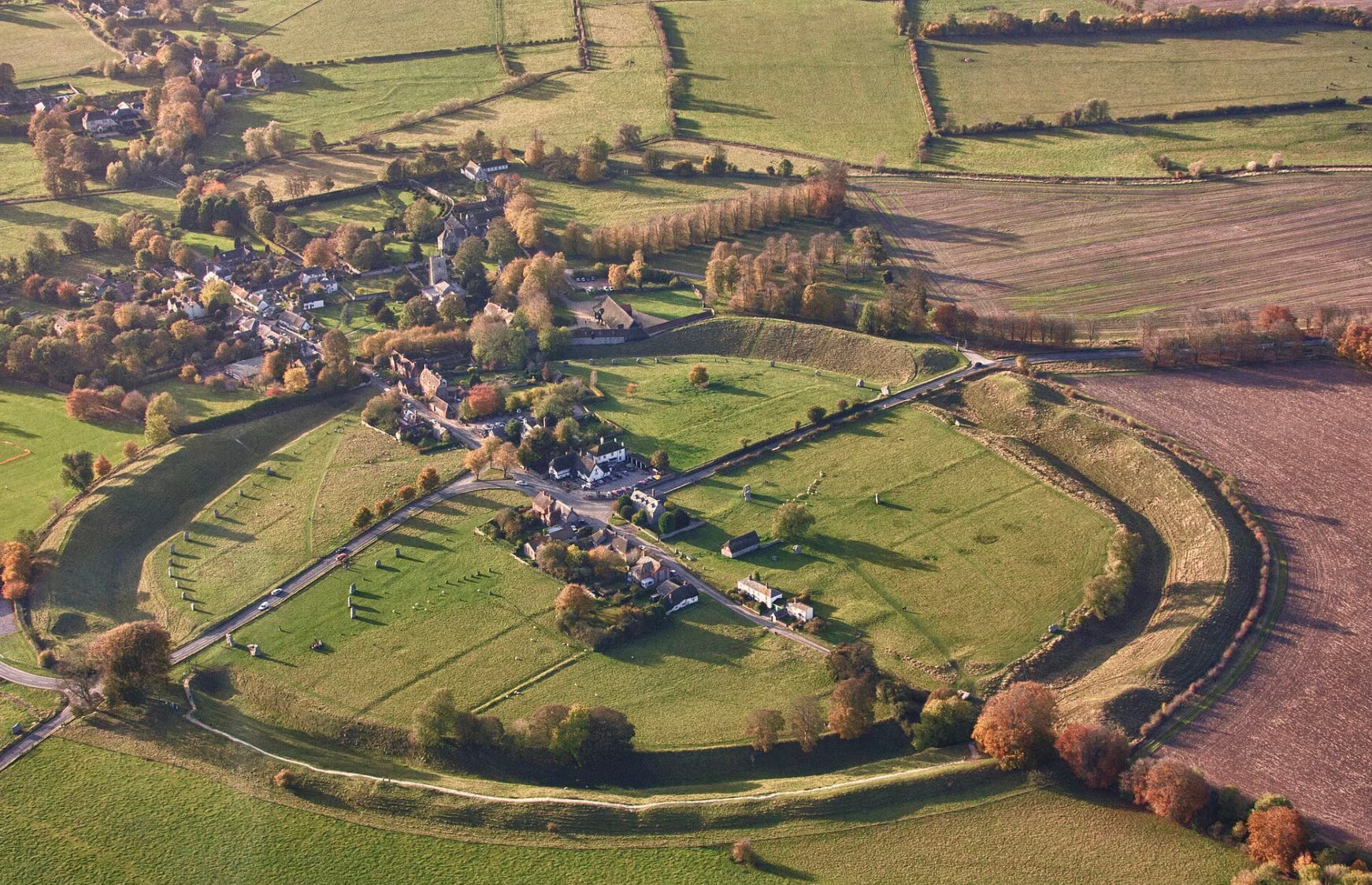
A double shuffle at the next junction carried me due north up through the avenue at Avebury. Rather incredibly the road bisects the henge and stone circles. It was as if you could drive through the middle of Stonehenge. Except better. After all, Avebury is the largest megalithic stone circle in the world.
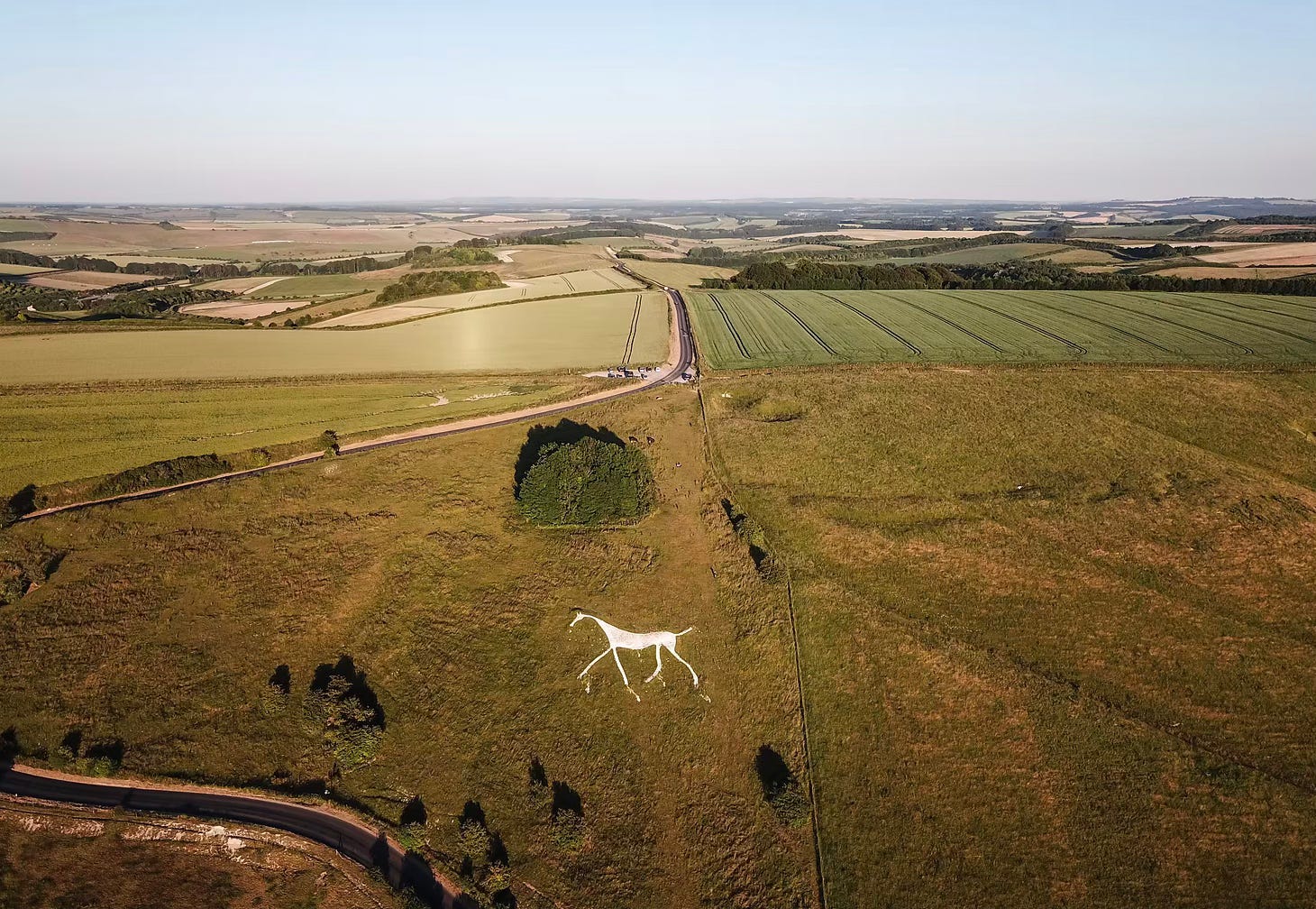
After Avebury if I was lucky I would be treated to the sight of the racehorses out on their morning gallop on the Downs. They were stabled nearby at Winterbourne Bassett. I would often see the stable boys take their thoroughbreds through their paces past the Long Tan standing stone and the chalk horse at Hackpen, a reminder of how integral horses are to this landscape.
From there it was a straight run up to junction 16 of the M4 motorway and into the business park I worked. The banality of my work-place compared with the preceding 30 minutes of my morning could not be more ridiculous.
“How lucky was I?” was my thought half a lifetime later in 2025 when my hike out over the Wiltshire Downs bisected that magical drive to work.
As I scrambled down from Adam’s Grave, I realised how little had changed. But why should it have? This is a landscape visibly shaped by man over 6,000 years. Why would the last 30 years have made much of a difference?
It wasn’t crop circle time of year. The wind had gone out of the sails of all that since it was revealed that most of them were made by a couple of blokes with a plank and a ball of string2.
But they had left a trace in the form of a ‘Crop Circle Centre’ on the road out of Alton Barnes. The information boards outside confessed to an acceptance of the ‘All Man Made’ theory, so much of the mystery had gone. But there’s no reason why the local economy should not continue to benefit from something that had put Wiltshire in general and the Pewsey Vale in particular, on the map.
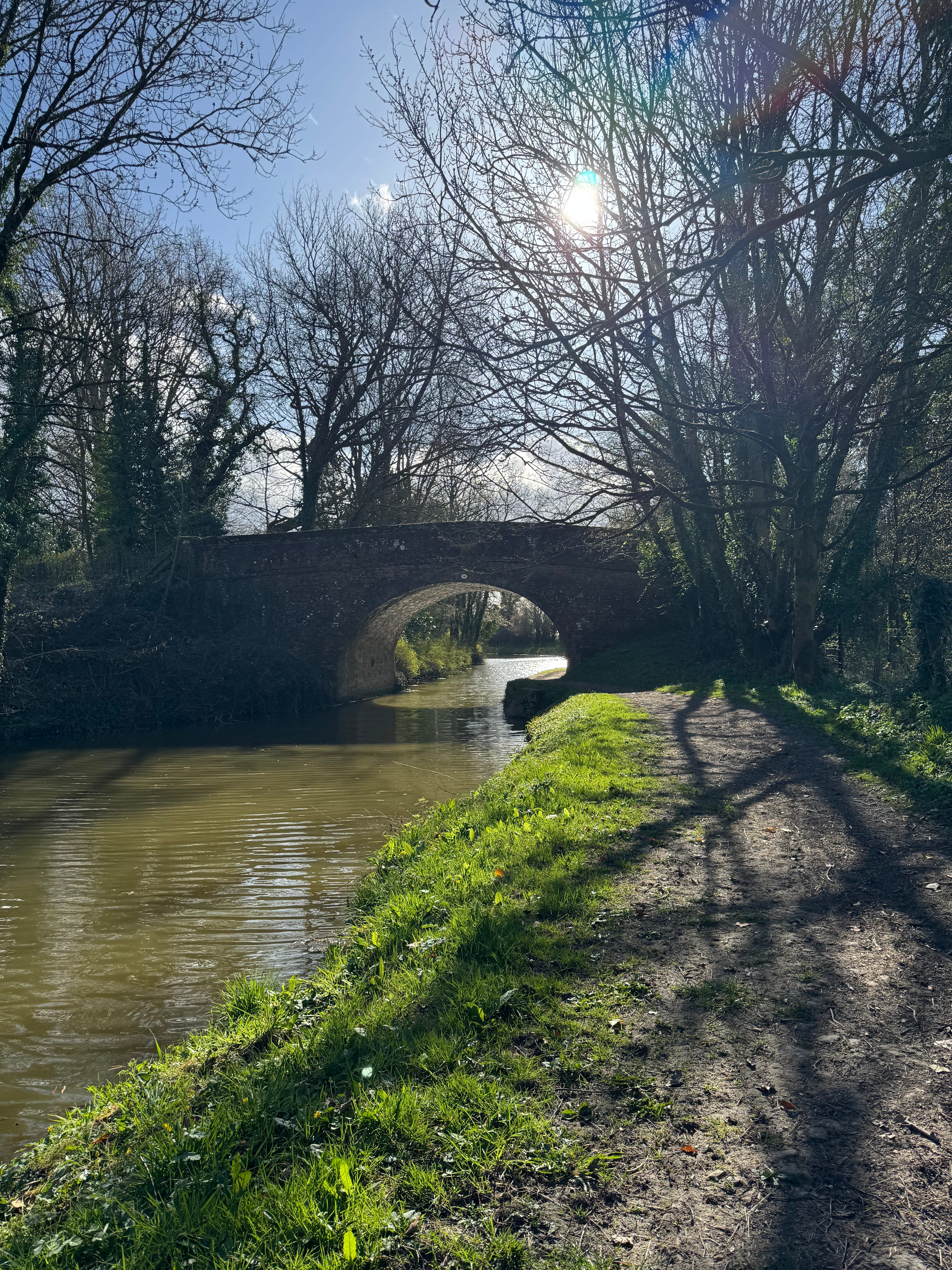
The weak early spring sunshine was breaking through as I took the Kennet and Avon canal for the final five miles of my odyssey. It was a stretch of towpath I used to run rather than walk along but it felt like the same me that was striding its dead straight course.
But how would I find the village I had lived in for two years of my life, the only time I had lived in the countryside?
I had spent the first two years of parenthood in Pewsey and I was a grandparent now. But this was an uncanny part of the world. Anything could happen. And it did.
To be continued
A most enjoyable fictional riff on the guys who kicked it all off is The Perfect Golden Circle by Benjamin Myers.
There is little more depressing than a business park beside a motorway!