
It was late March 2025. I needed to get my act in gear for my first crack at the South West Coast Path1 with Pete. It was in four weeks time.
Six hours a day, most of it either up hill or down dale, this was not going to be a walk in the park in my mid 60s. What’s more we would be carrying our food and clothing on our backs. The aim was to complete a week a year to finish up 630 miles later in 2030.
Not only was there the physical prep. I was suspected there would be a strong spiritual dimension to the journey. My childhood obsession with Tolkien pictured us as hobbits tramping towards Mordor with many an ordeal on the way.
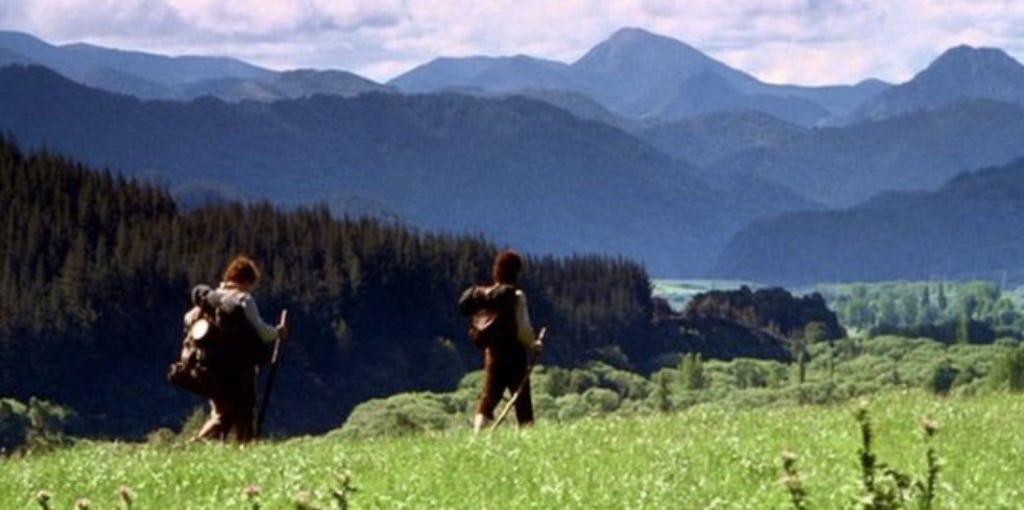
Such epic challenges are inscribed in mythology worldwide.
In the 8th century Japanese concept of misogi, the Shinto god Izanagi descends into the caverns of hell, swimming across freezing rivers, facing down demons to attain a state of sumikiri, pure clarity of mind and body.
Michael Easter gives this an “exercise bro” spin in his book ‘The Comfort Crisis’. According to him, we should all set a personal misogi that would not only be the defining event of our year, but it would also be something to look back on at the end of our life.
His was a 33 day hunting expedition to remote Alaskan back-country. He and his companions had to take four separate flights just to get the sniff of a caribou in their sights.
After that experience the author decided there were only two rules to make a challenge like that worthwhile.
Rule 1: Make it really hard
Rule 2: Don’t die
My equivalent would involve us taking a train to Taunton, then a bus to Minehead. We all have to start somewhere.
A month out from the big walk, I consulted my go-to guides for the last twenty years.
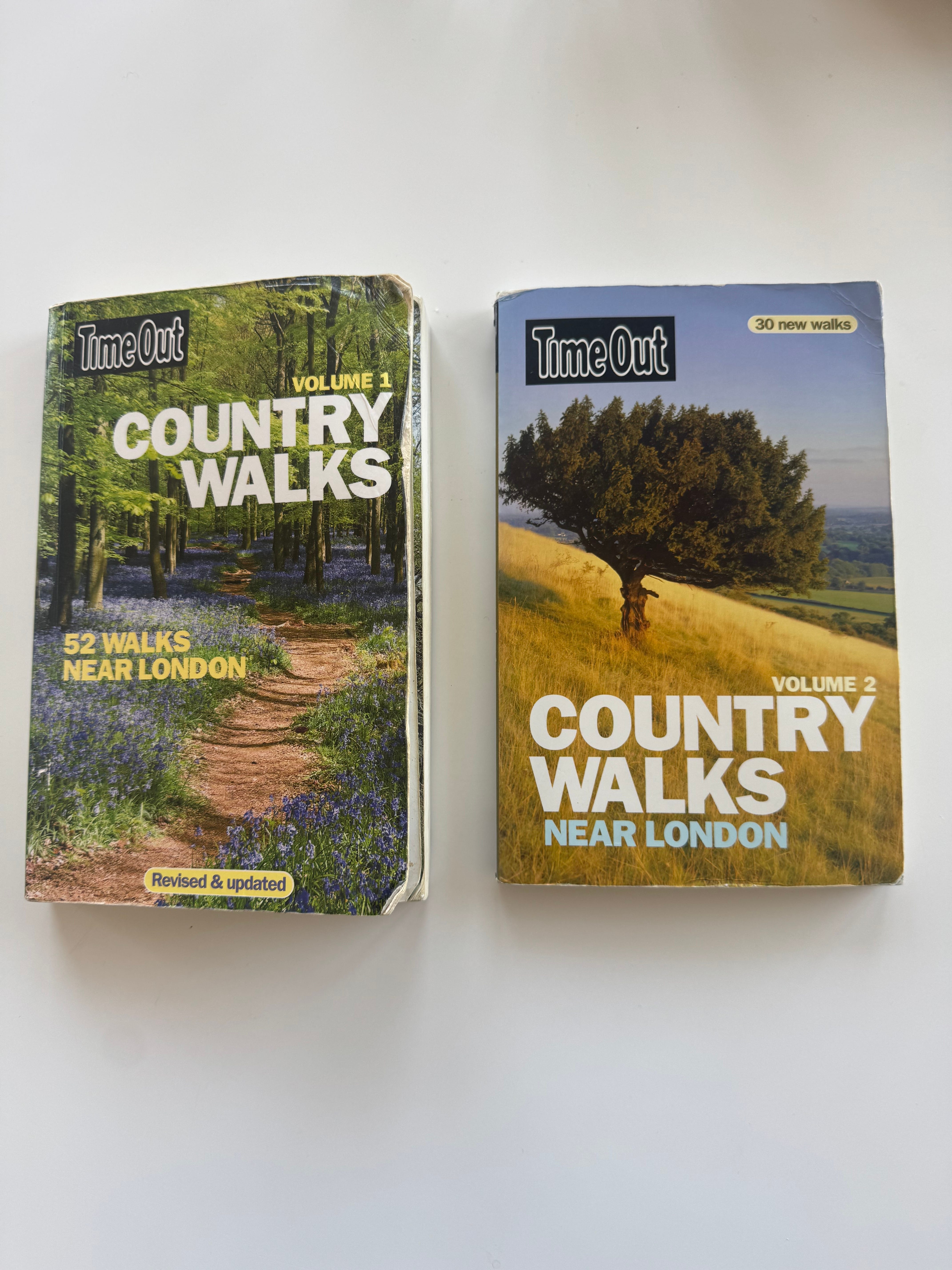
100% of the walks start and end with a train journey out of London. I had covered a good half of the 80+ originals but the community had now migrated online now and racked up nearly 400 well documented walks. You can of course download GPS versions onto your phone but I try to stick with the meticulous written directions pioneered by the books, each one a mini masterpiece in prose2.
I picked one that I had not come across before. It was called ‘The Pewsey Circular’. At nearly 17 miles and 1,300 feet in climbs, it was the closest I could get to a day out on the South West Coast path.
The walk was certainly the ‘exhilarating excursion’ the site promised it would be. But what I did not realise at the time was how much it would be a journey into both my own past and into the history of these Isles.
Pewsey is an isolated village just north of the Salisbury Plain in Wiltshire. I had lived there literally half a lifetime ago. In fact it’s the only time I have ever lived in the countryside.
Those two years were memorable both for the beauty of the landscape and for the fact that’s where family life started for me. We chose the place as it was only 30 minutes drive to my new job in Swindon.
I strode out of the station that March morning heading north towards the village of Oare. From there I climbed up a steep gradient onto the tops of the Wiltshire Downs and directly into a blustery north-easterly.
Coming from further north and heading for the same stile as me, was a vigorous looking woman, an octagenarian at the very least. She looked like her dogs were leading her as much as she was leading them.
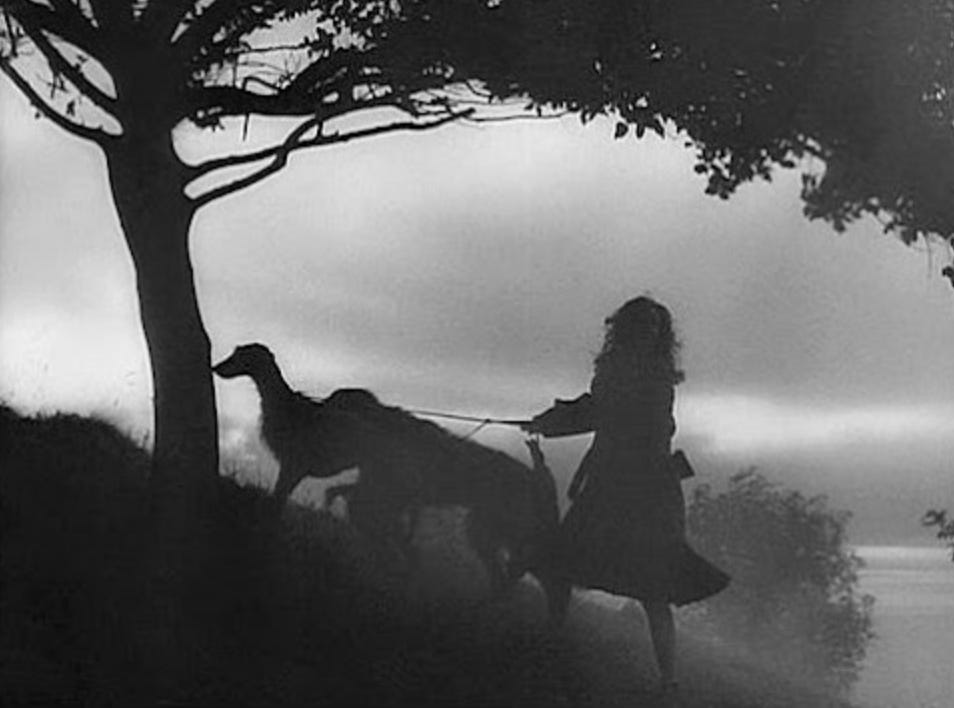
She looked spookily like Mrs Potts, one of many memorable characters in I Know Where I’m Going, the 1945 Powell and Pressburger film, a favourite of both Martin Scorsese and my brother.
An encounter was unavoidable once we converged at the next stile. I had to think of something to say.
I felt weirdly compelled to tell her that I had once lived in Pewsey. I blurted out a 30 second summary of my two year stay there.
Wind-swept and down-to-earth like her counterpart in the film, she addressed me directly: “So you are moving back here then?”
In her mind it was the most obvious next step in my life. How could you live anywhere else, was the implication.
I mumbled a reply and then took a footpath heading south to avoid answering the question.
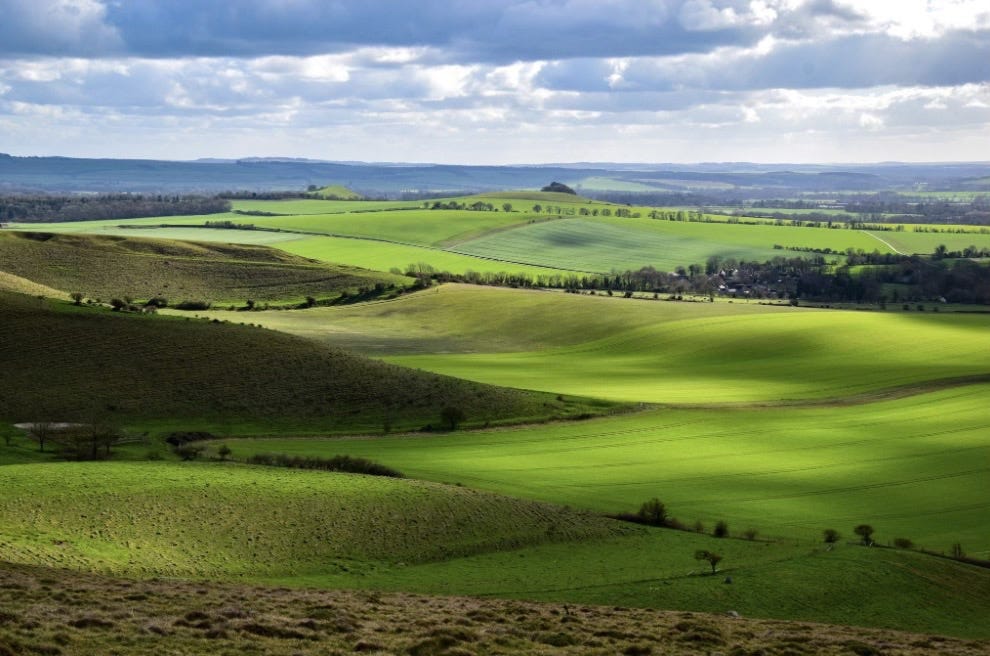
An hour further on, looming out of the lowering skies was Adam’s Grave, an Iron Age hill fort. Two great battles had taken place here in Saxon times, when it held the pagan name of Woden’s Barrow.
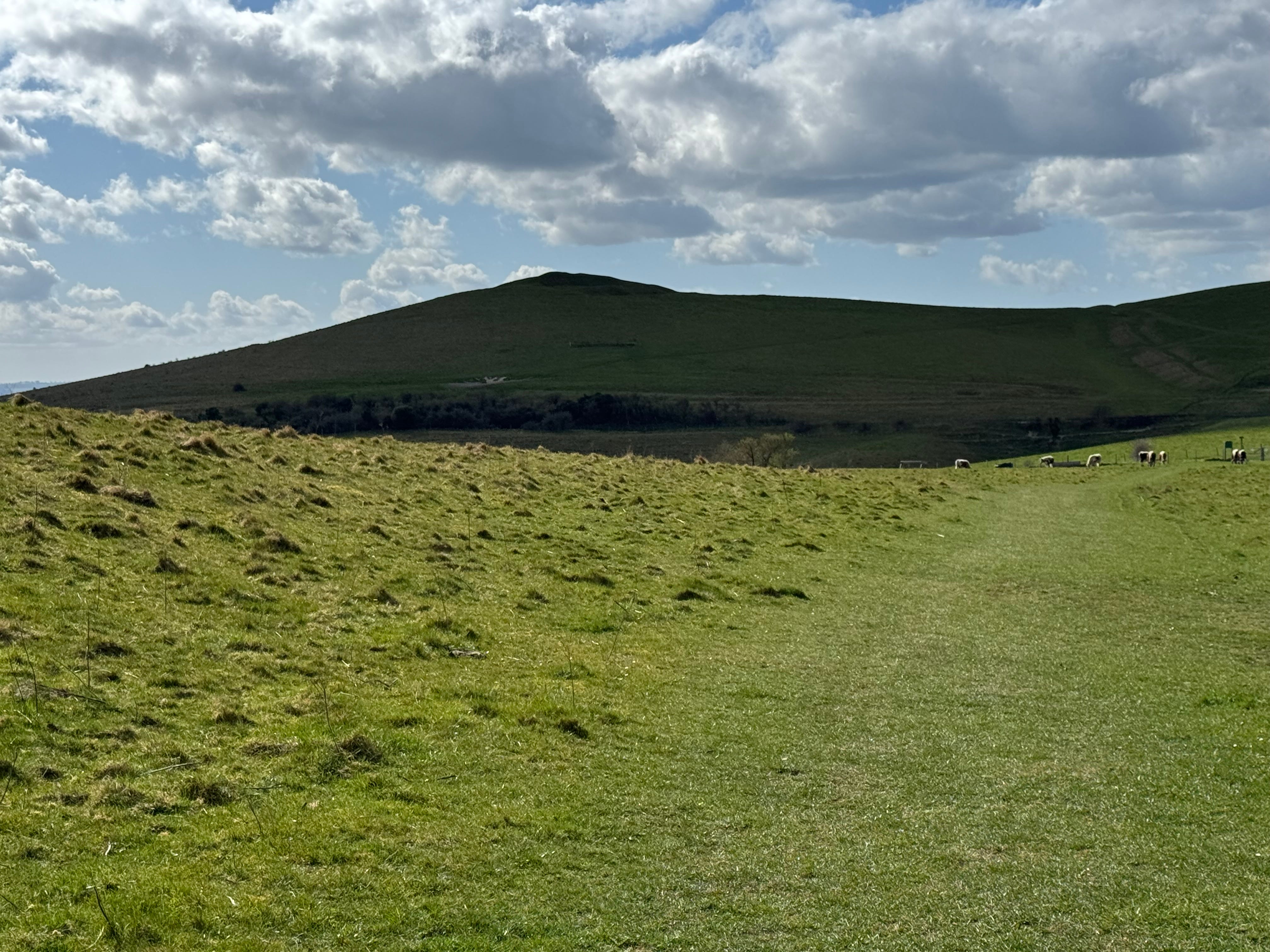
The spot was further memorialised by Edward Thomas in his poem Lob. He wrote it in 1915 whilst on the Western Front, recalling a walk he had made through Wiltshire before the Great War.
Like me he was starting out from Lambeth, his home and mine. And we were both in search of an earlier version of ourselves:
‘Many years passed, and I went back again
Among those villages, and looked for men
Who might have known my ancient. He himself
Had long been dead or laid upon the shelf I thought.
A girl proposed Walker of Walker’s Hill,
‘Old Adam Walker. Adam’s Point you’ll see
Marked on the maps’’
‘Lob’ is defined in the dictionary as ‘a country bumpkin’ and by Thomas himself as ‘an unlettered pagan English peasant’. This was not to be the last time a pagan English man would crop up on my walk that day.
The other worldly nature of this exact same spot came back into the public imagination in the early 90s just at the time I lived nearby. It could even be said that the eyes of the world were upon just that view from the summit of Adam’s Grave.
Apparently alien life-forms had landed at the foot of the hill and carved elaborate patterns into the wheat fields below.
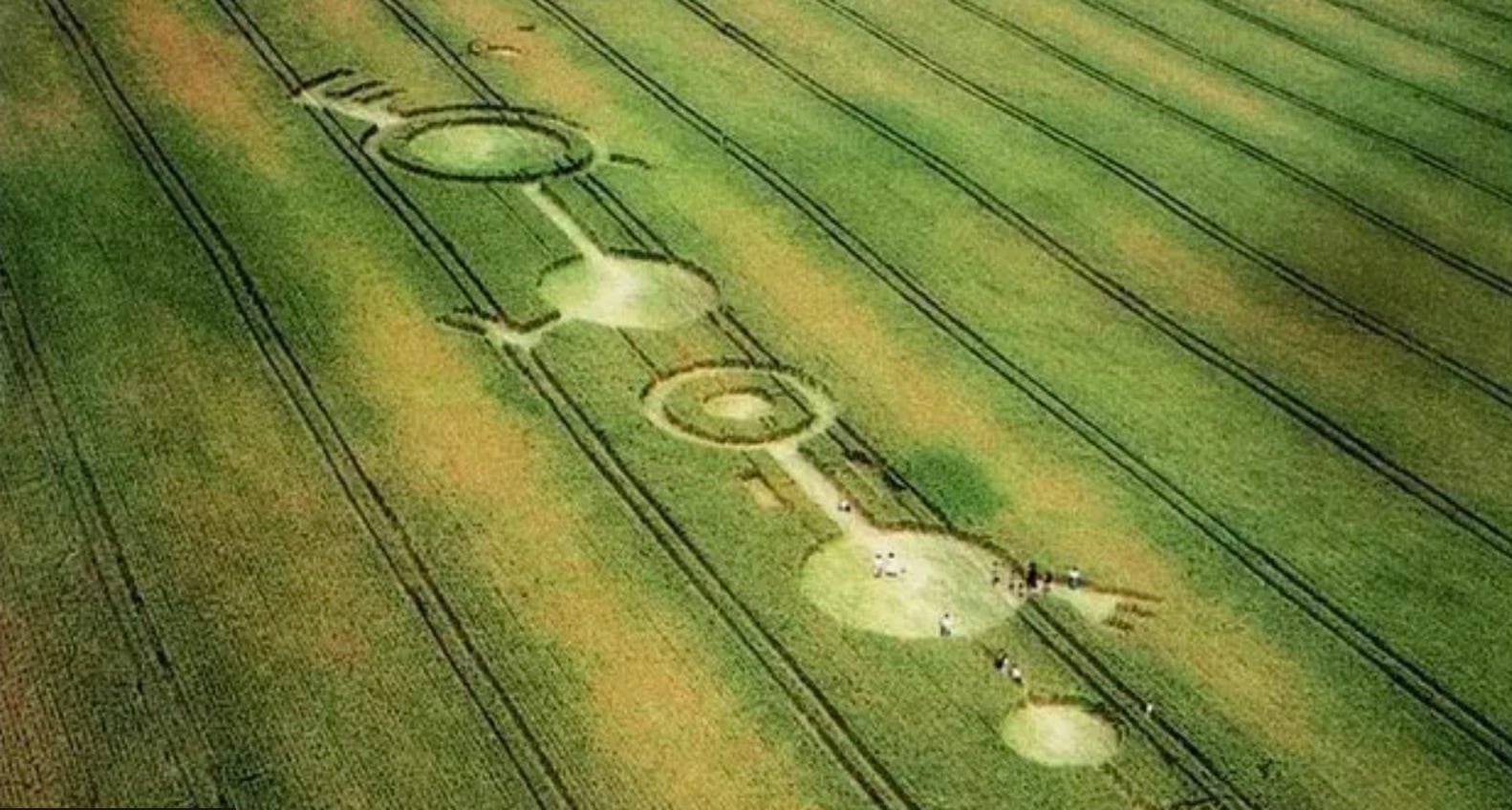
Where had they come from? What were they doing there? Why do it there?
To be continued…
If you are a keen walker based in London, I cannot recommend the Saturday Walkers Club highly enough.
Doh - Just as it starts to get interesting, it stops!