
The lack of a car had truly flummoxed me now. Satnav would either have got me there by now or at least pointed where I had gone wrong. I was on foot this time and was already flustered. I had barely left the train station.
The OS map showed three nature reserves nearby but I couldn’t figure out which was the nightingale one, the one from 2020 where I had first heard their song and known what the hell it was I was listening to.
I had decided that the third walk in search of this elusive bird would take me to another county, Essex after exploring nightingale hot spots in Sussex and Kent with varying degrees of success the previous two weeks.
I set off in the general direction of the reserves. It was the first heatwave of the summer at the end of May. The wind had changed direction, from a southerly to an easterly, giving welcome respite from the high temperatures.
The footpath headed out along field margins sown with red campion, poppies, buttercups and daisies. That government stewardship subsidy seems to be creating the right incentives for the farmers, I thought. The invertebrates and pollinators seemed to think so and the swallows agreed as they swooped in for them.
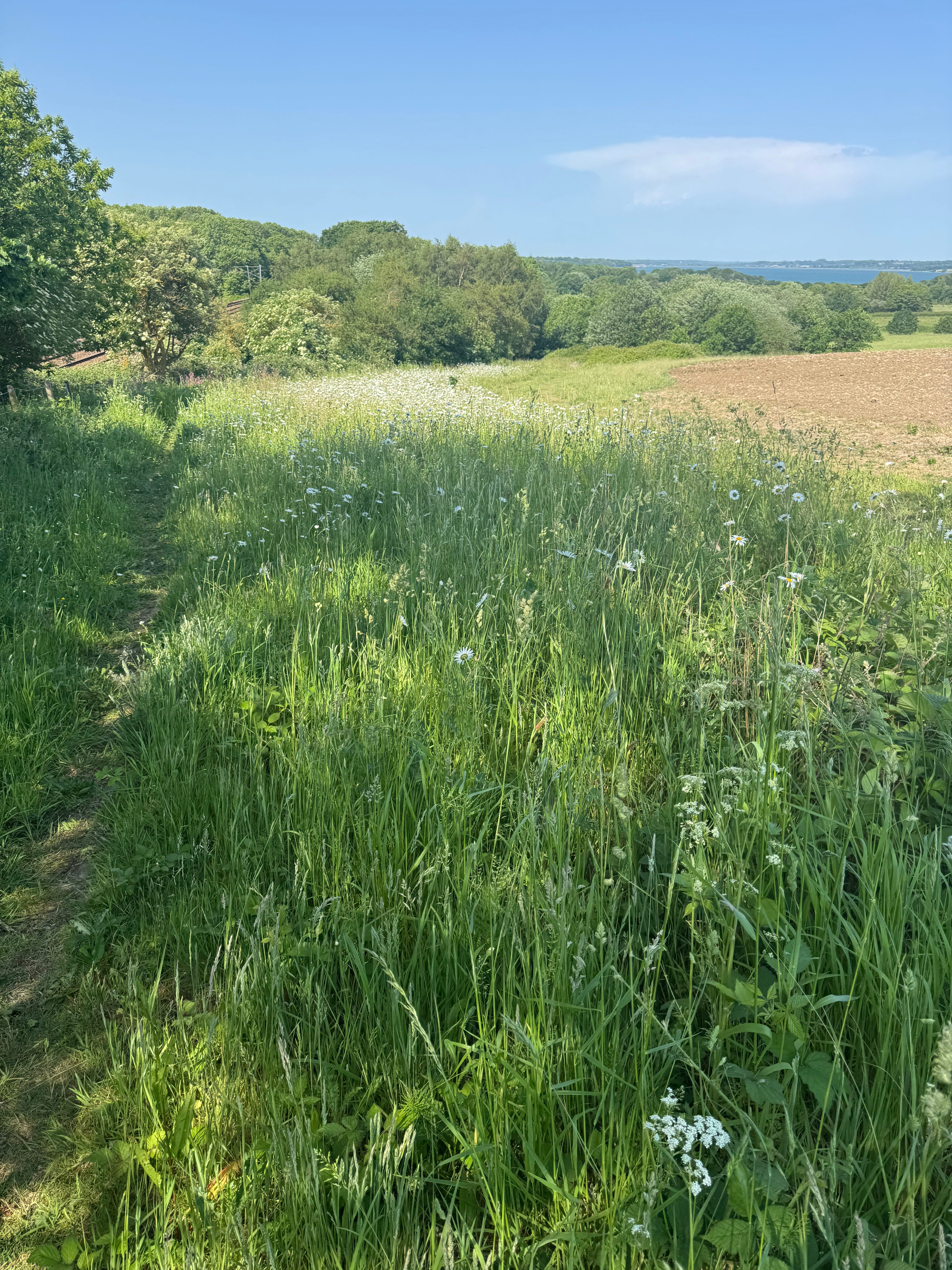
I saw a reserve with a car park marked on the map so I headed in that direction. Already from a distance I could see it was not the right one but the signage there caught my eye.
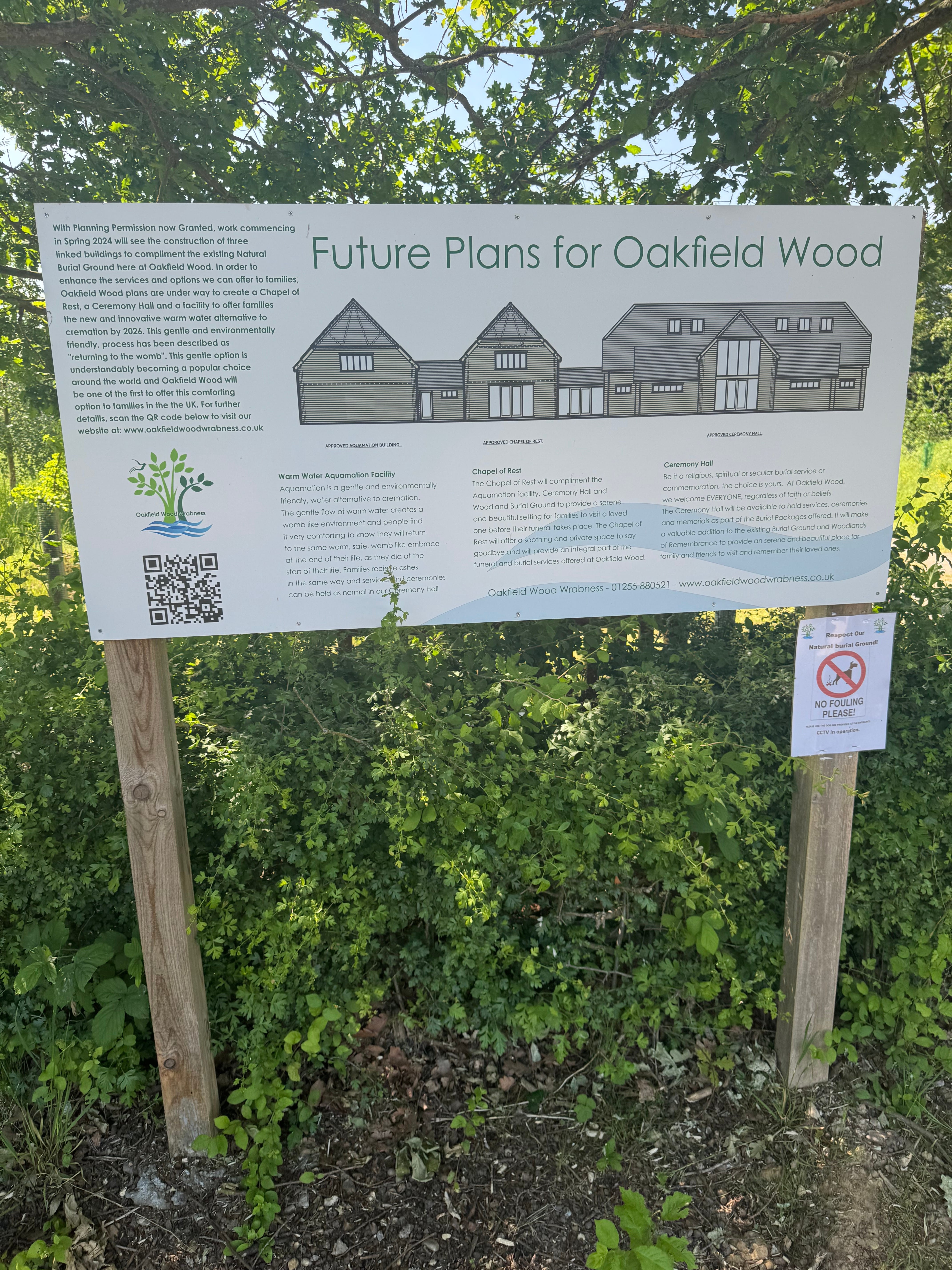
Oakfield Wood is a green burial site that doubles up as a nature reserve. You can be buried there or have your ashes interred. It can be religious or secular. And in the not-too-distant future you could have something called an aquamation where your body is heated up in water to generate your ashes. It could replicate the womb-like conditions in which we came into the world, without the carbon footprint. Which was all very interesting I thought but not what I had come for that day.
The entrance to the next reserve was a half a mile walk away and I recognised it straightaway. I was greeted by reassuring Essex Wildlife Trust branding and the call of a male cuckoo. The same bird then shot over my head, its silhouette ressembling something between a pigeon and a bird of prey. A promising start then but would that be it, like two weeks earlier at Knepp?
I veered off the main track, down an alley of blackthorn which would have been a blaze of glorious white blossom just a month earlier. The next song bird to pipe up sounded not quite like a blackcap. My app said ‘garden warbler’ and I said ‘good news’. Not just because they like the mature scrub that nightingales like but also because their song is utterly exquisite, like notes rippling up and down a babbling brook.
That was the solo that kicked off the choir. A nightingale started to duet with the garden warbler. At that point I decided to lay down in the blackthorn corridor with my rucksack as a pillow to enjoy what was being served up. Like a good anthropocentric human, it felt like this was a show being served up just for my delectation.
The next thing was a second nightingale started up from the neighbouring path. It sounded like each was leaving a pause for the first one, the reply often mimicking the other.
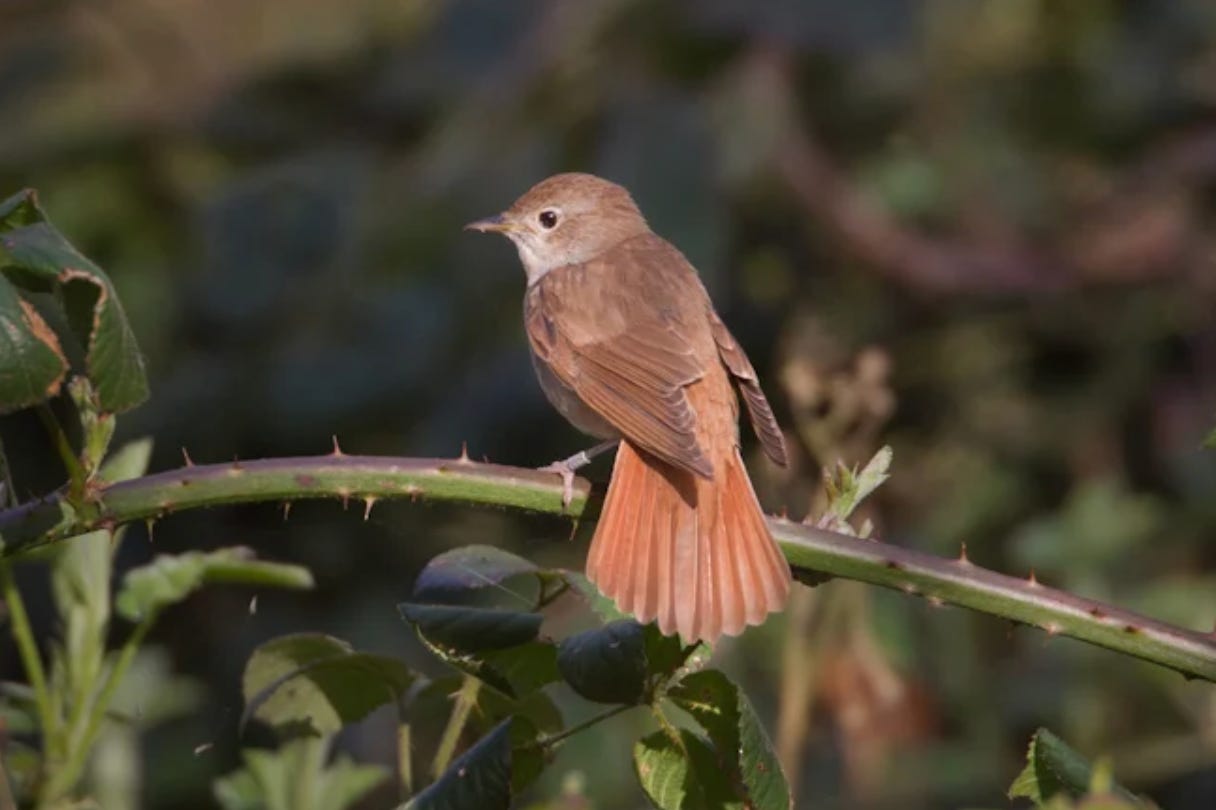
By this time the garden warbler had retired hurt but its place front of stage was taken by a turtle dove, purring like a cat. I now had the holy trinity of birds that had taken my breath away a few years back at Knepp - cuckoo, turtle dove and nightingale. I spent the next half an hour gazing up at the sky thinking I could happily die here.
Perhaps the neighbouring burial ground was not such a bad idea. I could take a plot and live out eternity with the chorus of those and other birds overhead every spring. After all it turned out that Wilco Johnson, the guitarist from Doctor Feelgood and the unofficial patron saint of Essex was buried at Oakfield Wood.
Now that’s the sort of company I wouldn’t mind keeping beyond this lifetime.